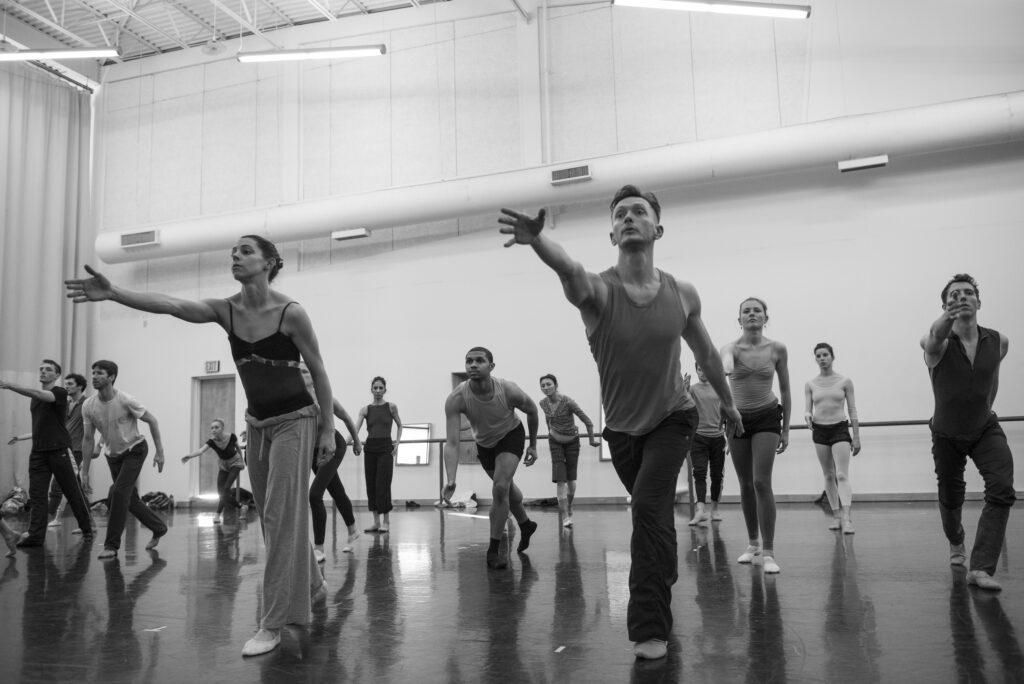
For Leslie Smart, Louisville Ballet’s 75th anniversary is much more than an organizational milestone. Her connection to the company stretches across generations, with nine members of her family involved with Louisville Ballet since its earliest years. She has experienced the organization from multiple perspectives, including as a dancer, supporter, board member, and — during a challenging period for the organization — as its CEO. Today, as a member of the Board of Directors and co-chair of the 75th anniversary committee, Smart has a unique perspective on both the history Louisville Ballet is celebrating and the future it is working to build.
That history, she believes, is ultimately about people. Louisville Ballet has endured and evolved because generations of dancers, artistic directors, board members, donors, staff, and audiences have believed in its importance to the community.
Listen to the Audience Interview with Leslie Smart brought to you by Stock Yards Bank & Trust
“For 75 years, Louisville Ballet has really been more than an arts organization,” Smart said. “It’s been part of the cultural fabric of Louisville.” She remembers former Artistic Director Bruce Simpson describing Louisville Ballet as “the pulse of the city,” a description she believes remains appropriate today.
Evolving with Louisville
Reaching 75 years has required Louisville Ballet to evolve alongside the community it serves. Smart believes remaining relevant means respecting the power and beauty of dance while recognizing that artists, audiences, and culture continue to change. The company’s history contains plenty of classical tradition, but its longevity has also depended on a willingness to introduce new ideas and find unexpected ways to connect people with ballet.
Smart pointed to 502, the collaboration involving Louisville native Jack Harlow and choreographer Ching Ching Wong, as an example of how the company has reached audiences who might not otherwise have experienced ballet. More recently, the company has continued that approach with works such as Frankenstein, choreographed by Artistic Director Anthony Krutzkamp, and a contemporary interpretation of Carmen set in 1970s Las Vegas.
“Tradition and innovation are not opposites,” Smart said.
Productions such as The Brown-Forman Nutcracker remain important because they have become part of Louisville’s traditions, but Smart believes an artistic organization must continue creating opportunities for new choreographers, voices, and ideas if it hopes to remain connected to its community.
There are signs that audiences are responding. Smart noted that Dracula sold out last season and that Louisville Ballet recorded 13 sold-out performances during the year, something she views as evidence of the community’s continued interest in and support for the company.
Preserving 75 Years of History
One of the anniversary’s most significant projects is happening away from the stage. The Filson Historical Society’s “Behind the Curtain” exhibit explores Louisville Ballet’s history through photographs, programs, documents, stories, and other materials that chronicle the people and productions that shaped the company.
The preservation effort began for Smart shortly after she arrived at Louisville Ballet and toured the organization’s archives. With the 75th anniversary approaching, she realized the collection needed professional preservation. Louisville Ballet was not equipped to serve as an archival institution, so Smart reached out to the Filson and began the process of transferring the materials.
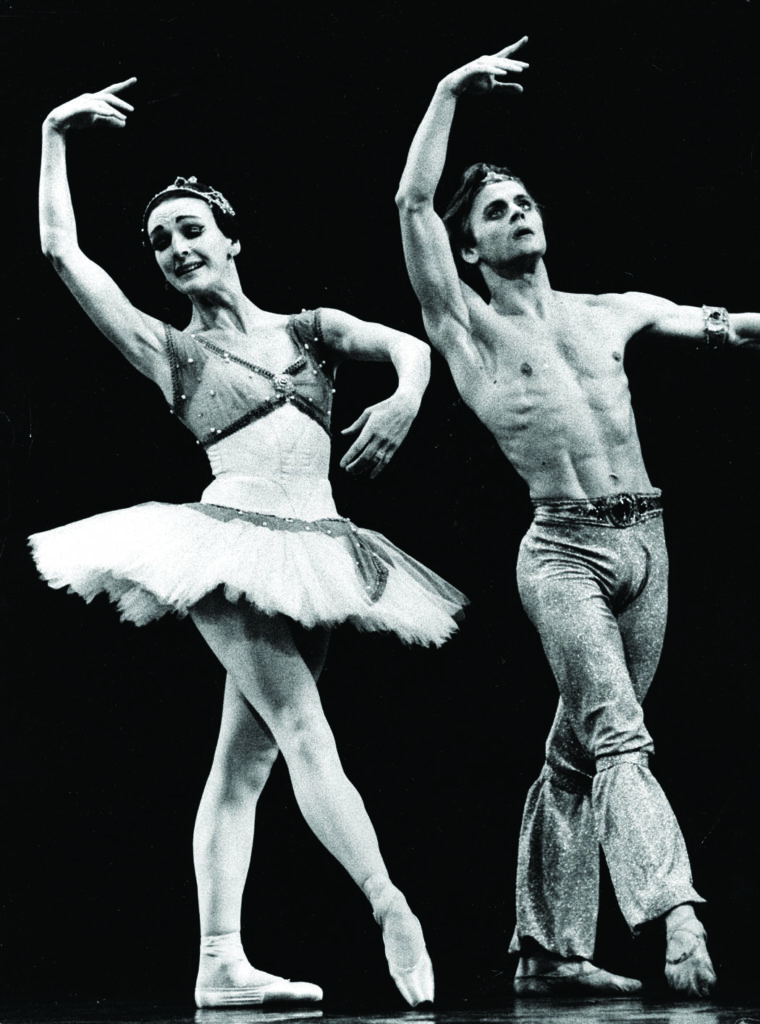
Helen Starr and Mikhail Baryshnikov practiced the pas de deux from “Le Corsaire” PHOTO BY JEBB HARRIS THE COURIER-JOURNAL SHOOT DATE IS OCT 17, 1979
The collection was not complete. Louisville Ballet alumni were encouraged to contribute photographs, programs, newspaper clippings, and other pieces they had saved in their personal collections. The effort helped fill gaps in the company’s story while ensuring those materials would be professionally preserved for future generations.
The resulting exhibit has also revealed pieces of history that even people with longstanding connections to the Ballet did not necessarily know. Smart recalled learning more about founder Nancy Dysart’s early leadership role, something that surprised her despite having personally known Dysart.
For Smart, discoveries like that demonstrate why preserving institutional history matters. The anniversary is an opportunity to celebrate familiar accomplishments, but it can also recover stories that might otherwise be lost.
A History Built by People
Some of Louisville Ballet’s most important chapters are represented through the people who have passed through the organization. At the opening of “Behind the Curtain,” Smart spent time with Carol Mix, one of Louisville Ballet’s earliest dancers. Mix later danced in The Nutcracker with her daughter, while her late husband, Dick, worked as a technical director and stage manager during the company’s early years.
Stories like theirs reinforce Smart’s belief that Louisville Ballet’s history is ultimately a collection of individual lives connected through dance.
The company’s artistic leadership has also shaped different eras. Smart pointed to Simpson’s tenure as an important period, including his role in securing the $1 million gift that helped make The Brown-Forman Nutcracker possible and bringing choreographer Val Caniparoli to create the production. Simpson also recruited Natalia Ashikhmina and her husband to Louisville. Ashikhmina went on to spend 18 years with Louisville Ballet before retiring, adding another chapter to the company’s artistic history.
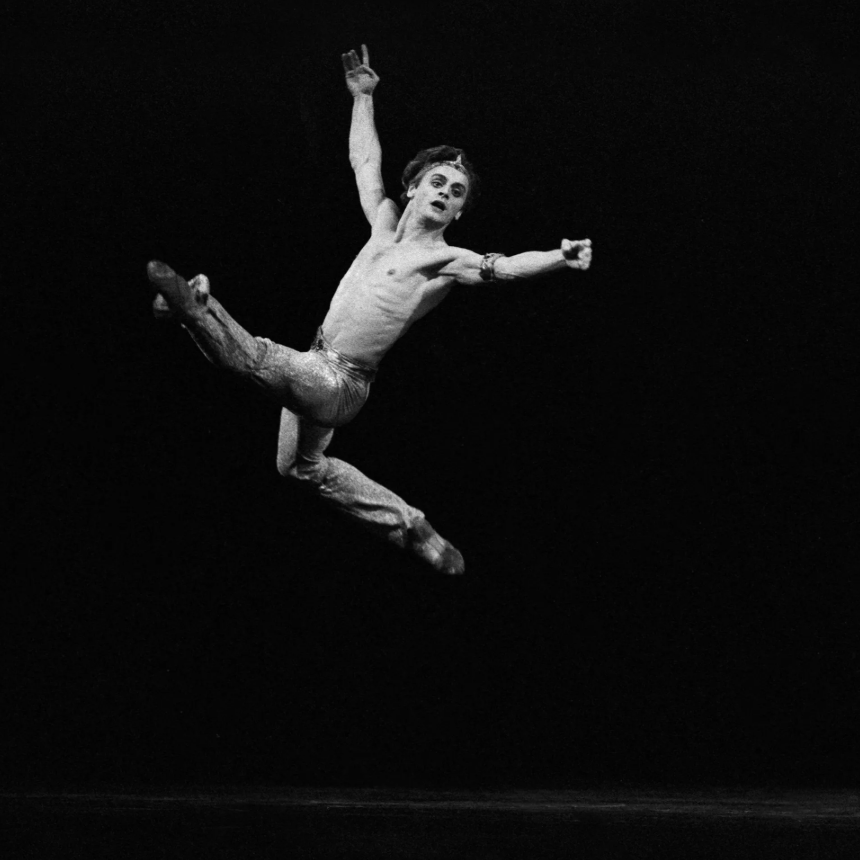
Louisville Ballet’s reach can also be seen in artists whose careers extended far beyond the city. Smart cited Louisville connections with internationally renowned dancer Mikhail Baryshnikov as well as Wendy Whelan and Clinton Luckett, both Kentuckians with ties to Louisville Ballet who went on to prominent careers in the dance world. Those relationships will be highlighted again when Baryshnikov, Whelan, and Luckett participate in special activities surrounding Carmen weekend in February 2027.
More Than What Happens on Stage
Perhaps one of the greatest changes Smart has witnessed is the expanding definition of what a ballet company can mean to its community. Louisville Ballet is still built around artistic excellence and performance, but its mission increasingly extends beyond the stage.
The Louisville Ballet School now reaches a large population of students, while community engagement initiatives are making dance accessible to people with a wider range of abilities and backgrounds. Smart is particularly enthusiastic about adaptive dance programs, which provide opportunities for people with disabilities to experience movement and the social connections that come with it.
She also sees potential in the emerging field of neuroarts, which explores relationships among movement, music, creativity, social connection, and well-being. Partnerships with Norton Healthcare and Bellarmine University are helping Louisville Ballet explore those possibilities and consider new ways dance can positively affect people’s lives.
“We are no longer defined solely by what happens on the stage, but how we engage in our community and use dance to positively affect people’s lives,” Smart said.
That commitment will eventually extend farther across Kentucky. With support from the commonwealth, Louisville Ballet plans to resume touring during its 76th season. Smart remembers touring Kentucky when she danced with the company and credits those experiences with deepening her appreciation for the state and its communities.
Bringing that tradition back will allow Kentucky’s official state ballet to reach audiences who may not regularly have the opportunity to attend a performance in Louisville.
Looking Toward the Next 25 Years
The 75th anniversary naturally invites questions about Louisville Ballet’s past, but Smart is equally interested in what the next 25 years might bring. By the time the company reaches its centennial, she hopes it remains artistically ambitious, accessible to people of different ages and abilities, and deeply connected to both Louisville and communities throughout Kentucky.
She would like to see Louisville Ballet continue attracting world-class dancers, expand the Louisville Ballet School, and preserve the history now being safeguarded through the Filson. One longer-term dream is a center of excellence for dance that could bring more of the organization’s educational, artistic, and community activities together.
“I want people to look back and say that we honored where we came from while building something even stronger for the next generation,” Smart said. “I think that would be an extraordinary legacy.”
For someone who has never experienced Louisville Ballet, or simply hasn’t attended in several years, Smart’s invitation is uncomplicated: come see it. Audiences don’t need to understand ballet terminology or know the history of a particular work to appreciate the athleticism, artistry, music, and storytelling happening onstage.
With 75 years behind it, Louisville Ballet has accumulated an extraordinary amount of history. Yet Smart believes the best way to celebrate that history is not simply to preserve it, but to use it as a foundation for what comes next — continuing to evolve, reaching new audiences, and making dance meaningful to another generation of Louisville and Kentucky families.
For tickets and more information, visit LouisvilleBallet.org