For Louisville, Downtown has always been more than a collection of office buildings and city blocks. It is where the community gathers for concerts, theater, sporting events, festivals, celebrations, and some of the city’s biggest shared moments.
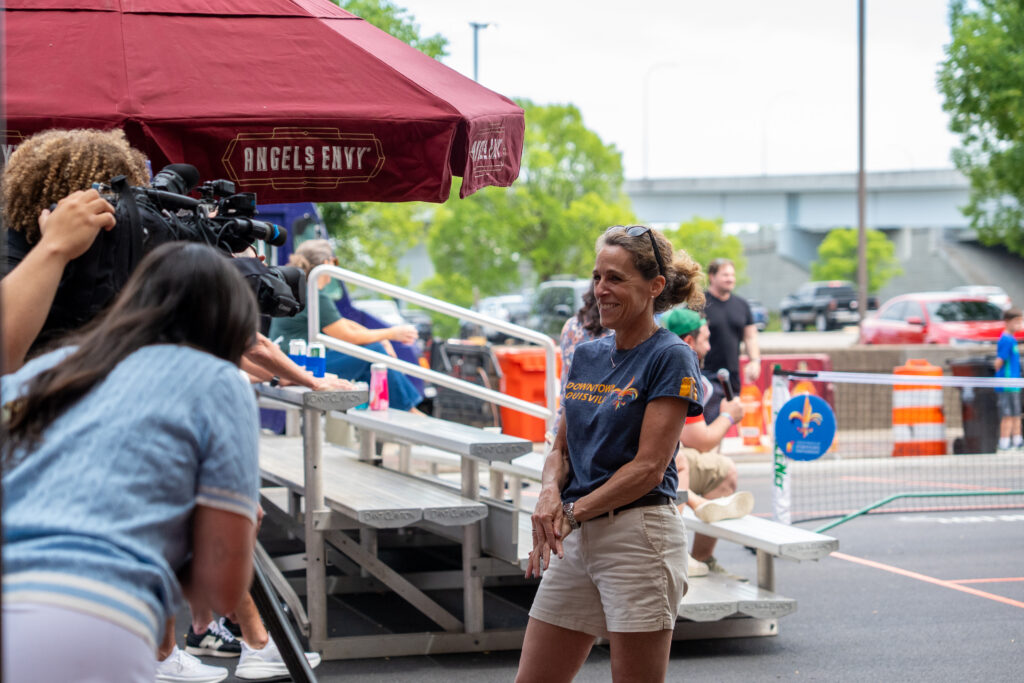
And for Rebecca Fleischaker, Executive Director of the Louisville Downtown Partnership (LDP), that role is central to what makes Downtown Louisville special.
Listen to the Audience Interview with Rebecca Fleischaker brought to you by Stock Yards Bank & Trust.
“Downtown is everyone’s neighborhood,” Fleischaker said. “It is the center of our city. It is the one neighborhood where the community gathers.”
That gathering place is also the epicenter of Louisville’s arts, entertainment, and visitor economy.
Within a relatively compact area are some of the region’s most recognizable venues and attractions, including The Kentucky Center for the Performing Arts, KFC Yum! Center, Actors Theatre of Louisville, Louisville Palace, Mercury Ballroom, Fourth Street Live!, Louisville Slugger Field, Frazier History Museum, and a growing collection of museums, bourbon attractions, restaurants, and hotels.
In 2025 alone, more than 800 music, arts, and sporting events were hosted in the Downtown area, according to Fleischaker, creating a steady stream of people arriving for everything from Broadway performances and major concerts to basketball, baseball, and soccer games.
“There’s no question that when we have events, there are more people on the streets, and there’s more vibrancy,” she said.
That activity has an impact well beyond the doors of a theater or arena. Someone attending a concert may arrive early for dinner. A couple seeing a Broadway show may stop for drinks afterward. A family visiting a museum may spend the afternoon exploring Main Street, while sports fans can turn a game day into an entire evening Downtown.
“When people come Downtown to do something, they may grab a bite to eat or get a drink before a game or concert or after the event,” Fleischaker said. “The small businesses and storefront businesses do better when there are more people here.”
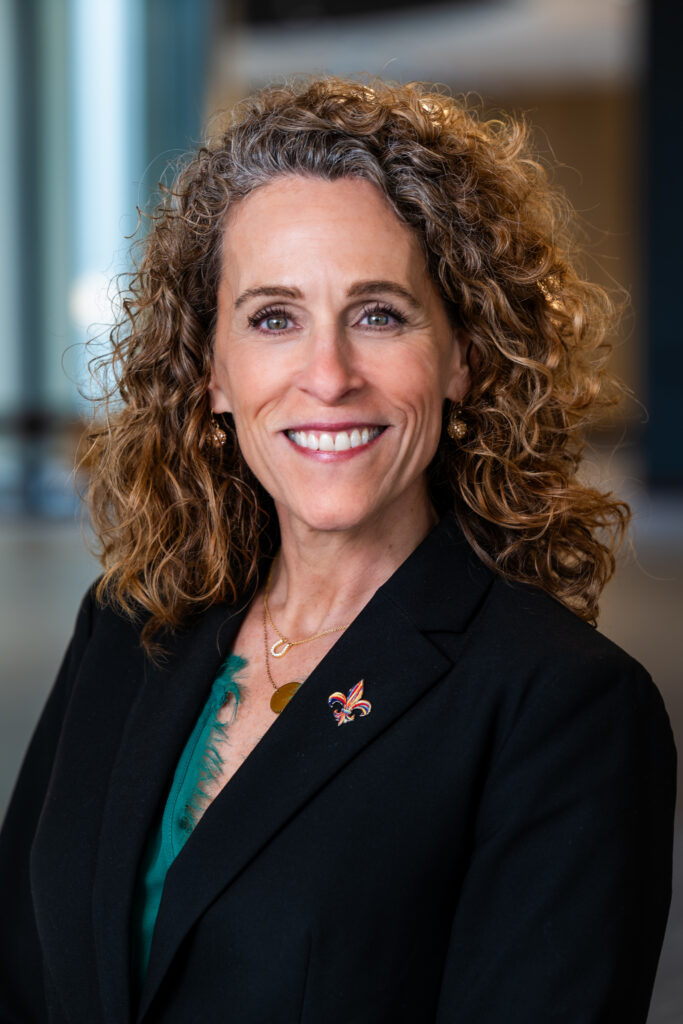
Rebecca Fleischaker – Executive Director of Louisville Downtown Partnership
That relationship between entertainment and the broader Downtown economy has become increasingly important as Louisville — like cities across the country — continues adjusting to changes in the traditional office environment. Tourism, attractions, and cultural events are performing well, Fleischaker said, but the number of employees working in offices Downtown during the day has yet to return to pre-pandemic levels.
Rather than relying solely on the traditional 9-to-5 population, Downtown needs more reasons for people to live, visit, dine, shop, and spend time Downtown throughout the week.
There are encouraging signs. In 2025, nearly 40 new storefront businesses, restaurants, and retailers opened Downtown — about twice the number that closed.
“That’s a pretty significant number,” Fleischaker said.
Downtown’s Next Chapter
LDP is working to encourage continued investment through several loan programs designed to assist small businesses, housing development, and commercial redevelopment. LDP’s Small Business Loan program can help entrepreneurs with the costs of turning an empty storefront into an operating business, including equipment, point-of-sale systems, shelving, and more.
The Downtown Commercial Loan Fund can assist with redevelopment of Downtown buildings, something Fleischaker sees as especially important in a city filled with historic architecture.
“We want to hold onto our beautiful, architecturally significant buildings,” she said. “We’re lucky that we have so many.”
Preserving those buildings while giving them new uses can help Downtown retain its character while still supporting new investment, restaurants, businesses, and housing.
In addition, the Downtown Housing Assistance revolving loan fund helps support the creation of new market-rate housing, while LDP is also looking at ways to encourage additional affordable and workforce housing.
A strong Downtown needs three key elements, Fleischaker said: tourism, daytime employees, and residents. Two of the three are in good shape. Tourism is very strong, and Downtown employee numbers are edging back toward pre-COVID levels. Residential development is where Louisville lags, which is why it is LDP’s No. 1 priority for the next decade.
“The best way to get vibrancy on the streets is to have people who are walking around to create that 18-24 hour activity,” said Fleischaker.
The strongest activity continues to be along Main Street, stretching from the area around Angel’s Envy and Louisville Slugger Field to Louisville Slugger Museum & Factory and Kentucky Peerless Distilling Co. But Fleischaker sees considerable opportunities beyond Main Street as well.
Surface parking lots and underutilized properties could become apartments, condominiums, hotels, entertainment venues, attractions, or other developments capable of adding even more people and activity to the Downtown core.
“There are lots of ways to invest your money as a developer where you will recoup it because we know we have the demand,” she said.
Improving Downtown ‘Corner by Corner’
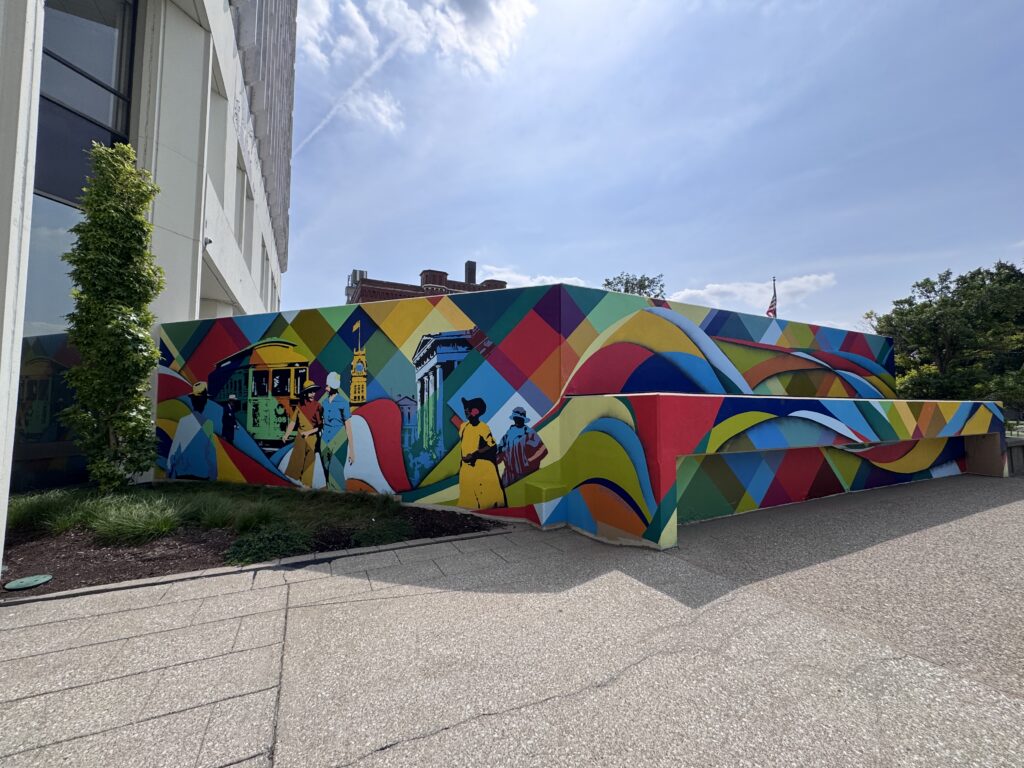
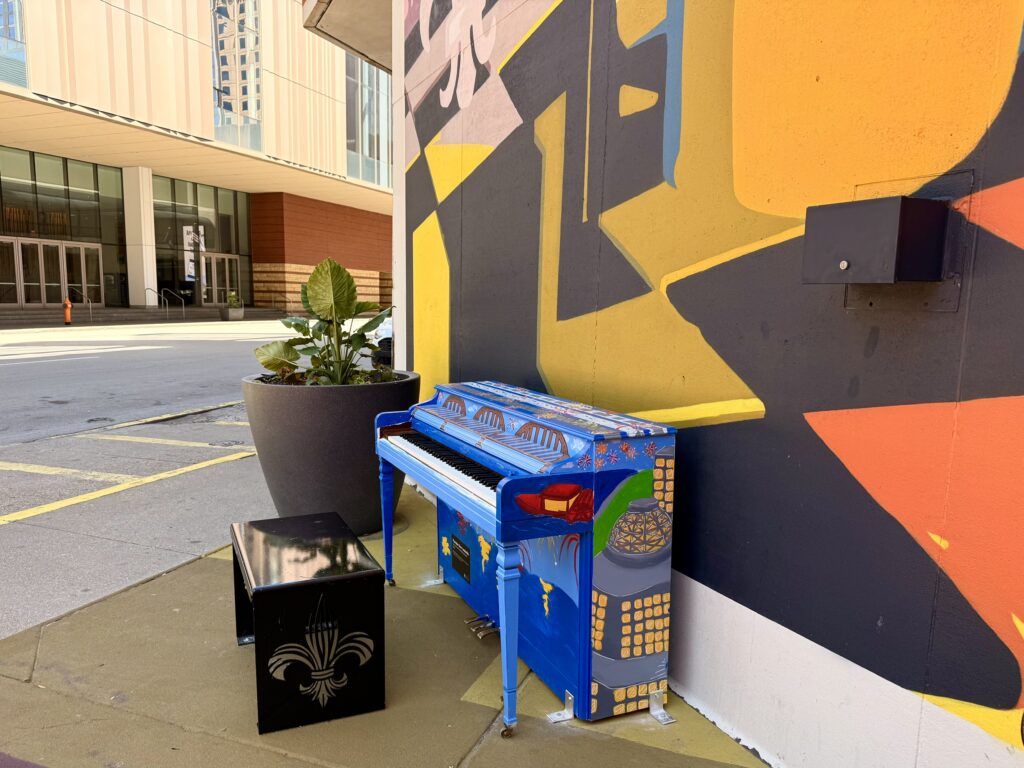
Not every improvement requires a major new development. Some of LDP’s most visible initiatives are happening at the street level, where visitors may have noticed colorful public pianos, new seating areas, flowerpots, landscaping, string lighting, murals, swings, and other additions appearing throughout Downtown. For Fleischaker, those touches are about creating a sense of place and making the experience of being Downtown more attractive and memorable.
Think about visiting another city, she said. Often, the things people remember most are the unexpected details — the mural that becomes a photo backdrop, the inviting gathering space, or the unique streetscape that could only belong to that city. LDP wants to create more of those moments here.
“We’ve put a lot of money and intention behind what I call ‘corner by corner,’” Fleischaker said, “trying to get new color and new concepts on the street so that when you’re turning the corner or walking somewhere, you have a pretty regular ‘ooh’ or ‘ahh’ moment.”
The idea is simple: make Downtown feel cared for, interesting, and distinctly Louisville. A beautifully painted piano sitting alongside historic architecture, flowers, and street banners can transform what otherwise might have been just another sidewalk into something memorable.
“It really does give you the entire idea that you’re meant to be here,” Fleischaker says. “This is a space that’s taken care of.”
Public Art Changes Perception
Murals and public art are another important piece of that strategy. A colorful “disco Pegasus” mural at Fourth and Jefferson streets is among the newer additions, while other projects are planned or underway. LDP’s CitySpot program focuses on transforming underused or oversized public spaces through art, plants, seating, and other creative improvements.
Sometimes a space people have passed for years without noticing can take on an entirely different identity once color and creativity are introduced.
“As soon as you bring color to it or new plantings or public art, it’s kind of like, ‘Oh my gosh,’ ” Fleischaker said. “I have worked Downtown for 30 years and sometimes don’t even notice something until we bring color or attention to it.”
That beautification work is not simply decorative. It can also influence how people perceive Downtown and whether they want to return, spend more time there, or show it off to friends and visitors.
LDP also works with organizations including Louisville Visual Art and Louisville Metro’s Office of Arts + Creative Industries to identify artists for projects. One recent call for artists for a planned mural on East Main Street generated 53 submissions.
Fleischaker stressed that supporting local artists is part of the mission as well. “We want to pay our artists,” she said. “We definitely don’t do anything asking artists to do anything for free.”
More funding, she added, would allow even more murals to appear across Downtown. “We have lots of great walls, and we have lots of great artists.”
A Welcome on the Street
While murals and landscaping may be among the most visible changes, one of Downtown’s longest-running programs is also among its most important. The Downtown Ambassador Program dates back to 1991, when Louisville leaders were beginning to imagine Downtown as more than a weekday business district.
Today, ambassadors remain a familiar presence on Downtown streets, greeting visitors, providing directions, answering questions, and helping create a sense of hospitality.
They also perform cleaning services such as sidewalk litter abatement and power washing that supplement normal city services. For someone who may only visit Downtown occasionally — for a show at The Kentucky Center, a concert at the Yum! Center, or another special event — that visible presence can make a difference.
“Seeing somebody on the street and knowing that you’re going to be greeted with a smile makes you feel welcome and makes for a positive experience,” Fleischaker said.
That feeling of welcome connects many of LDP’s initiatives. Whether through a major concert, a new restaurant, a mural, improved lighting, or simply someone offering directions on the sidewalk, the goal is to make people want to spend more time Downtown and come back again.
For those who have not explored Downtown Louisville recently, Fleischaker’s message is straightforward: “You’re missing out if you’re not coming Downtown.”