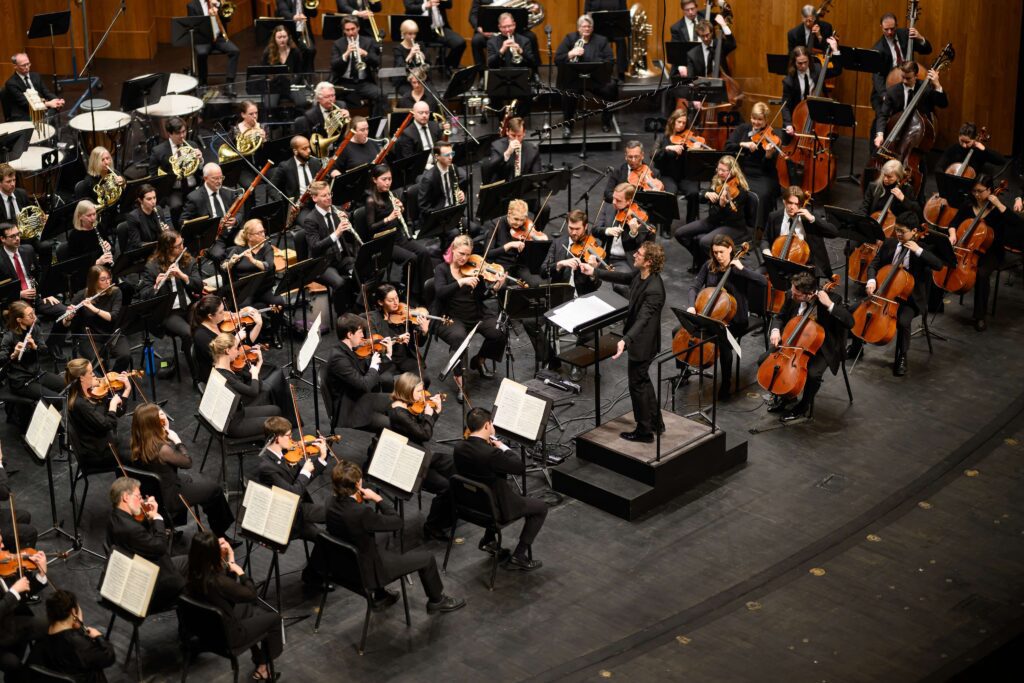
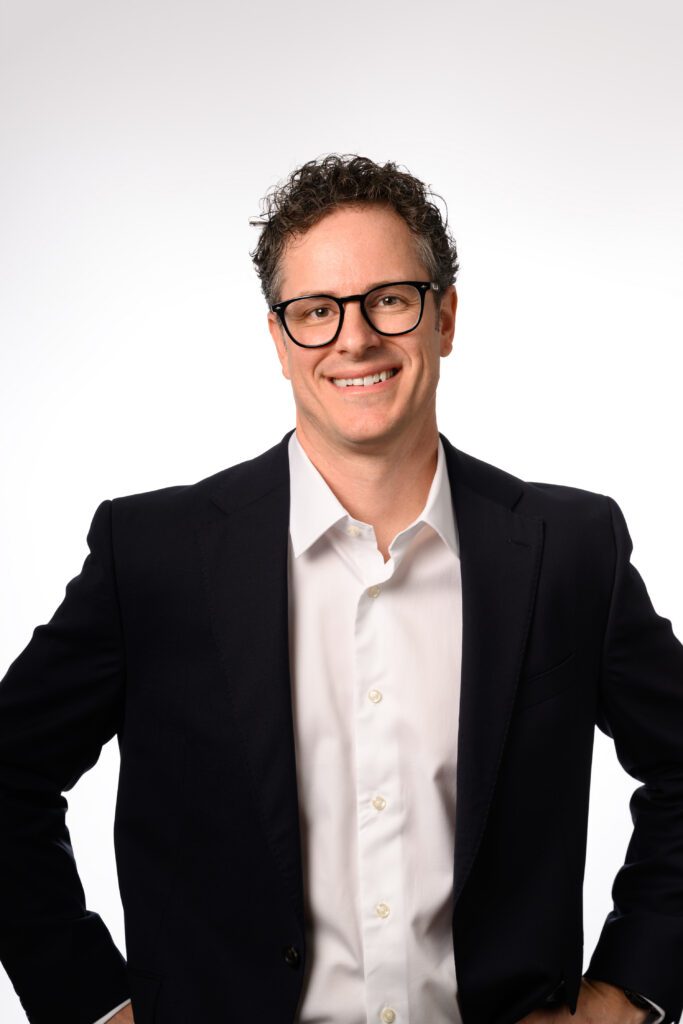
 When Jude Vaclavik talks about joining the Louisville Orchestra, his excitement is evident. The composer, educator, arts administrator, and music publishing executive has spent his career working across many areas of the music industry, but stepping into the role of chief executive officer for one of the country’s most historically innovative orchestras represents something especially meaningful.
Listen to the Audience Interview with Jude Vaclavik brought to you by Kentucky Tourism.
“To be part of the Louisville Orchestra in any capacity is exciting, but in a leadership role, it is the thrill of a lifetime,” Vaclavik said during a recent interview with Audience Magazine.
Vaclavik arrives in Louisville with a professional background that does not follow a single traditional path. He began his music career as a composer and earned three degrees in music composition from The Juilliard School. From there, his career expanded into academia, where he worked as both an educator and administrator, as well as music publishing, fundraising, and other areas of the industry.
He also continues to compose. Vaclavik describes himself as an “industry omnivore,” someone who has experienced many different sides of the music world and learned something valuable from each one. Rather than viewing those positions as unrelated stops along the way, he sees them as parts of a larger education that prepared him to lead an organization like the Louisville Orchestra.
“Every place I have worked has given me a new skill,” he said. “I’m a big proponent of learning on the job.”
His experience in the classroom, for example, helped him develop communication, empathy, and leadership skills while learning how to work with people who bring different questions, concerns, and perspectives to the table. Fundraising taught him the importance of relationships and communicating an organization’s value, while his work in publishing provided experience working with composers, artists, and institutions throughout the music industry.
Together, those experiences have shaped an approach to leadership centered on listening, collaboration, and continuing to learn.
Joining an Orchestra with Momentum
Vaclavik has taken over the Louisville Orchestra during a period of significant momentum. The organization has enjoyed strong attendance, sold-out performances, prominent guest artists, national recognition, and growing engagement throughout Kentucky. While still relatively new to Louisville at the time of the interview, he said the orchestra’s staff and musicians had already made a strong impression on him.
“The staff is a world-class group of people,” he said. “I couldn’t have asked for a better group to land with and to be in the office with.”
His admiration extends to the musicians themselves. As a lifelong fan of orchestral music and a composer who has dedicated much of his professional life to the art form, Vaclavik understands the preparation and commitment required to perform at a high level.
 He describes the Louisville Orchestra musicians as an exceptional assembly of artists and says his appreciation for the group has continued to grow as he has gotten to know more of them personally. That foundation will be important as he works alongside Music Director Teddy Abrams, the musicians, staff, board, and supporters to sustain the orchestra’s recent success while identifying new opportunities for the future.
An Ambitious Season Ahead
The 2026-27 season provides an immediate showcase for the range and ambition that have come to define the Louisville Orchestra. Vaclavik is particularly excited about Verdi’s Requiem, with Abrams leading the orchestra through one of the most monumental works in the classical repertoire. The piece brings together orchestra, chorus, and soloists for music that can move from quiet reflection to enormous dramatic power, and it also carries a personal connection for Vaclavik.
During a previous position, he visited the location in Milan where the Requiem premiered, and his career in music publishing connected him professionally with Verdi’s historic publisher. Having the work become one of the first major performances of his Louisville tenure makes the occasion even more impactful.
“It is a monumental work,” he said. “It’s a pillar of the repertoire, and I’m so thrilled to be part of it.”
Another major attraction is internationally acclaimed pianist Yuja Wang, whose relationship with Abrams has produced memorable collaborations. Vaclavik believes her decision to perform in Louisville says something important about the orchestra’s reputation within the larger classical music world.
“She doesn’t come to every orchestra in the United States,” he said. “That she is coming here is a statement. This is a place where people come to do special things.”
Those performances are representative of a season that moves comfortably between classical masterworks, contemporary music, and programming designed to reach audiences with a wide range of interests. That variety is an important part of the Louisville Orchestra’s identity.
Rather than asking audiences to fit into a narrow definition of what an orchestra concert should be, the organization continues finding different ways to introduce people to the power of live orchestral music.
A National Reputation Built in Louisville
While Louisville may be a smaller market than some cities associated with the country’s largest orchestras, Vaclavik is quick to point out that the Louisville Orchestra has held an important position nationally and internationally for decades. Much of that reputation can be traced to First Edition Records, the orchestra’s groundbreaking recording initiative that commissioned, performed, and recorded new music while establishing Louisville as a major center for contemporary American composition.
“It was a pillar of American music,” Vaclavik said, adding that he would love to see First Edition Records “come back to life, roaring into the future.”
The recording project helped establish a reputation for innovation that remains part of the orchestra’s identity today through new commissions, recordings, collaborations, and programs that often stretch the traditional boundaries of a symphony orchestra.
Vaclavik recently heard Abrams discussing the Louisville Orchestra during a BBC interview in London, an experience that reinforced just how far the organization’s reputation reaches.
“The industry is aware of what we’re doing,” he said. “They know we are innovative and that we are doing things other organizations, even some that are much larger than us, are unable to do.”
He believes Louisville audiences deserve considerable credit for making that experimentation possible. The community has demonstrated a willingness to embrace new ideas alongside familiar repertoire, giving the orchestra the freedom to create experiences that might be more difficult elsewhere.
Community Comes First
Despite those national and international ambitions, Vaclavik says any discussion about the orchestra’s future must begin with Louisville and Kentucky. He had only been in the city for about a month when he spoke with Audience, yet he already felt a strong connection to the community because of the reception he received and the affection people expressed for the orchestra.
He believes that relationship exists because community engagement is not simply an additional program for the Louisville Orchestra; it has become a fundamental part of what the organization does.
That commitment extends well beyond Louisville through programs such as the In Harmony tour, which takes the orchestra into communities throughout Kentucky. The initiative provides opportunities for people who may not regularly have access to professional orchestral music to experience the musicians in their own communities. For Vaclavik, maintaining those connections across rural and urban Kentucky is just as important as expanding the orchestra’s national profile.
“We make sure that we are able to reach our audiences throughout the commonwealth and across rural and urban divides,” he said.
Over the next five years, he would like to see the orchestra deepen those relationships while also becoming a model that other communities notice and potentially follow. He envisions people outside Kentucky discussing not only the performances taking place in Louisville but also the way the orchestra approaches community engagement, new music, and artistic experimentation.
Doing that will require continuing the work already underway while finding better ways to communicate the Louisville Orchestra story beyond the region.
Opening the Doors to New Audiences
One of the most important parts of that future involves reaching people who enjoy music but may not think an orchestra concert is for them. Vaclavik sees several ways to make that introduction.
Pops and crossover programming can provide an easy entry point because audiences may already recognize the featured performers or music. This season, for example, Leslie Odom Jr., widely known for originating the role of Aaron Burr in Hamilton, offers musical theater fans an opportunity to experience a familiar artist surrounded by the sound of a full orchestra.
Vaclavik also encourages newcomers simply to take a chance on a traditional concert. His perspective comes from personal experience because classical music was not a major part of his childhood.
One of his first meaningful encounters with an orchestra came when his school put students on a bus and took them to a performance. He could not have known at the time that the experience would help introduce him to the art form around which he would eventually build his life and career.
“I wouldn’t have known that I would fall in love with this art form if I hadn’t tried it,” he said.
Not every piece of music will connect with every listener, and Vaclavik believes that is perfectly fine. With such a broad range of repertoire and programming, another concert can provide an entirely different experience.
“Give us a couple of tries,” he said. “Classical music is for everybody.”
For someone who has never experienced it live, there is something unique about entering a concert hall as musicians tune and prepare, watching the lights go down, and then allowing the outside world to disappear for the next couple of hours as dozens of musicians create something together onstage.
As Vaclavik begins his tenure, that combination of accessibility and ambition may ultimately define the next chapter of the Louisville Orchestra. He wants the organization to continue experimenting, attracting world-class artists, expanding its national reputation, and finding new ways to tell its story, but he also wants it to remain deeply connected to the community that has helped make all of that possible.
And as he gets to know that community, Vaclavik has a simple request for Louisville Orchestra patrons: if you see him in the hall, stop and say hello.
For tickets and information about the Louisville Orchestra’s 2026-27 season, visit LouisvilleOrchestra.org.