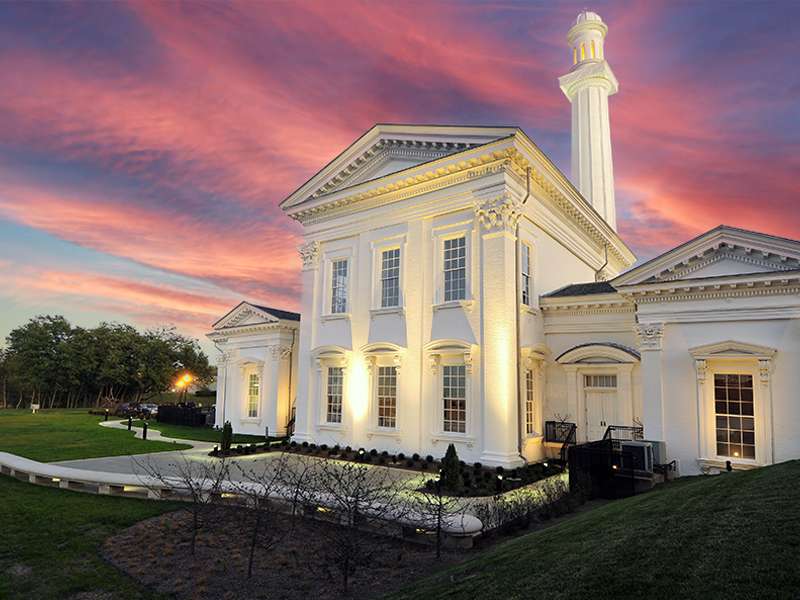
For generations of Louisvillians, Louisville Water Tower has been a familiar sight along River Road, rising above the Ohio River as one of the city’s most recognizable landmarks. But behind its distinctive architecture is a story that reaches far beyond appearance. Louisville Water Tower represents more than 165 years of engineering, innovation, and determination to provide Louisville with one of its most essential resources: high-quality drinking water.
During a recent interview with Audience Magazine, Louisville Water Co. historian Jay Ferguson shared the history of the site, the engineering that made it possible, and some of the extraordinary challenges faced by the people responsible for keeping Louisville’s water flowing.
Listen to the Audience Interview with Jay Ferguson brought to you by Kentucky Tourism.
Built to Serve a Growing City
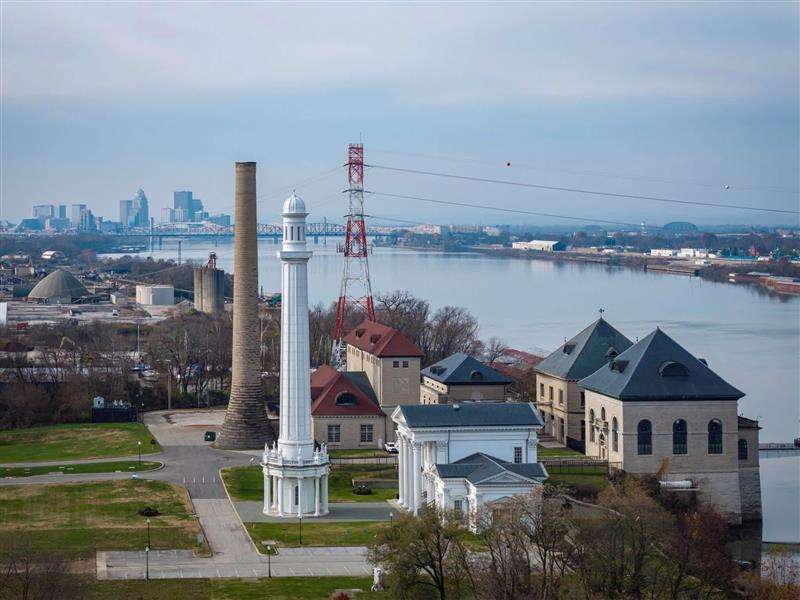
Built in 1860 as part of Louisville Water’s first “WaterWorks,” Louisville Water Tower was strategically located along the Ohio River, which served as the city’s water source. Water was originally pumped uphill to a reservoir near the area where the Veterans Affairs (VA) Hospital is located today, and gravity helped deliver it throughout Louisville.
Louisville Water’s original engineer, Theodore Scowden, used Cornish steam pumps, technology developed in Cornwall, England. Large steam-powered plungers drew water from the Ohio River and forced it toward the reservoir.
Although many people assume the approximately 185-foot-tall Louisville Water Tower was built to store water, Ferguson explained that it actually served as a standpipe. It helped control pressure surges created by the massive pumps and provided the back pressure needed for the machinery to operate properly.
Gravity also allowed sediment in the river water to settle, but that early process had limitations. In the 1890s, Louisville Water brought in George Warren Fuller, a bacteriologist who helped develop a more advanced process combining sedimentation, coagulation, and filtration. Those early innovations became important building blocks for the sophisticated water treatment system Louisville and the rest of the world rely on today.
The Tornado That Brought It Down
Louisville Water Tower has survived several dramatic moments, including an 1890 tornado that tore through Louisville and toppled the standpipe. At the time, the original Pumping Station and Water Tower were crucial to the city’s water supply, with their massive engines operating nearly around the clock.
Ferguson said engineers heard windows rattling and wind roaring before the tower came crashing down. Without the back pressure it provided, the heavy plungers in the Cornish steam pumps could slam down violently. Engineers had only seconds between strokes to shut down the engines.
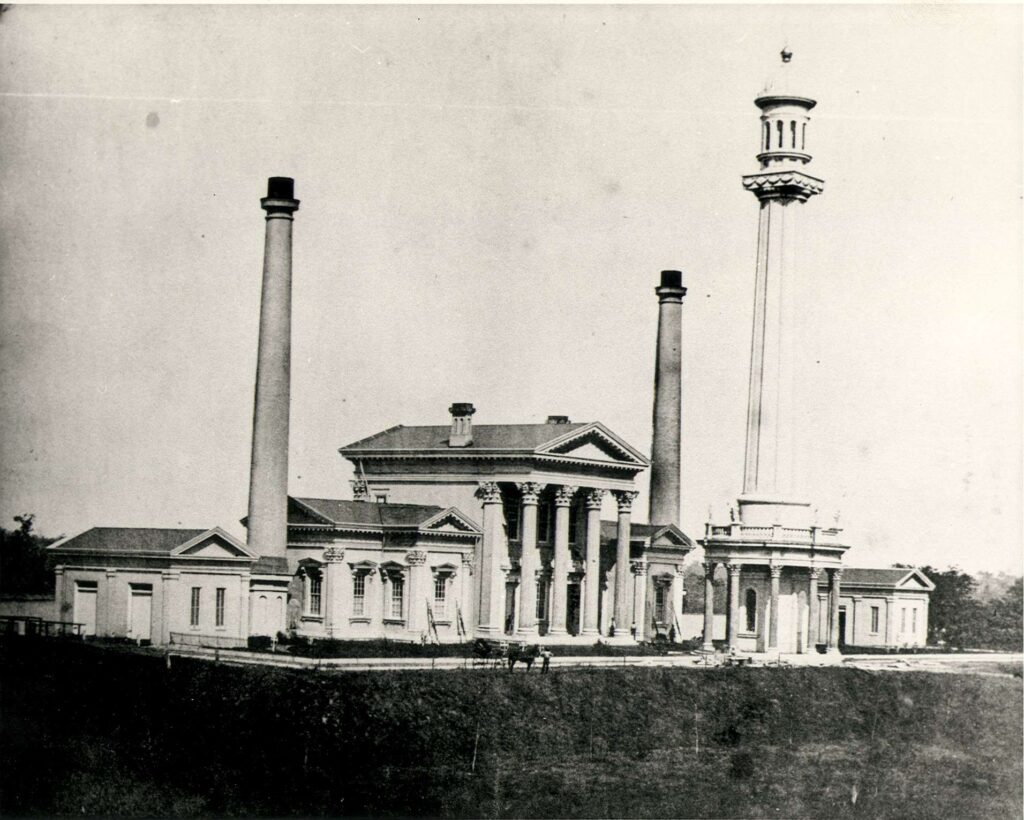
Although most of the tower was destroyed, its original base survived. A temporary standpipe served until 1899, when workers rebuilt the Louisville Water Tower into essentially the structure visitors see today.
Keeping Louisville Supplied During the 1937 Flood
Flooding had long been a concern at the site. The original Pumping Station had been built above the highest flood level known at the time, but it flooded in 1883 and 1884. Later pumping stations were built higher.
Nature tested Louisville Water again in January 1937, when unprecedented rainfall sent the Ohio River to levels never before recorded — more than 10 feet above the 1884 crest.
Nearly 20 inches of rain fell in less than a month, and the river eventually crested at 57.1 feet on Jan. 27. Electricity and the station’s normal steam system became unusable, creating the very real possibility that Louisville could run out of water.
Chief Engineer L.S. Vance devised an extraordinary solution: use the boilers of a steamboat to power one of the old steam-driven pumps. Pumping Station Superintendent B.E. Payne and a small crew traveled through flooded Louisville by automobile and rowboat to reach the steamboat C.C. Slider, then brought it up the flooded Ohio River to Pumping Station No. 2.
The crew connected the boat’s boilers to one of the steam pumps and eventually restored pumping operations. Even with more than 4 feet of water inside the station, Louisville Water managed to pump water every day during the flood. Rationing continued until Feb. 5, when normal operations could finally resume.
An Architectural Landmark
Beyond the engineering, Louisville Water Tower and the original Pumping Station that sits behind the tower are architectural treasures. Ferguson said the tower is the oldest ornamental water tower in the United States. Its Romanesque-inspired design includes cast-iron window and door surrounds, terracotta details, and an impressive amount of Louisville craftsmanship.
Much of the original facility was produced locally. Massive beams used in the pumping equipment, some weighing approximately 22 tons, were cast at a downtown foundry and hauled along a planked River Road using teams of horses. Even the terracotta architectural elements were made in Louisville.
The city could have constructed a simple industrial pumping station, but Louisville Water’s founders wanted residents to take pride in the company and in the infrastructure created for their community.
More Than a Historic Building
More than a century and a half later, that sense of pride remains central to the Louisville Water story. For Ferguson, the history encompasses architecture, art, technology, engineering, and generations of people dedicated to providing clean water.
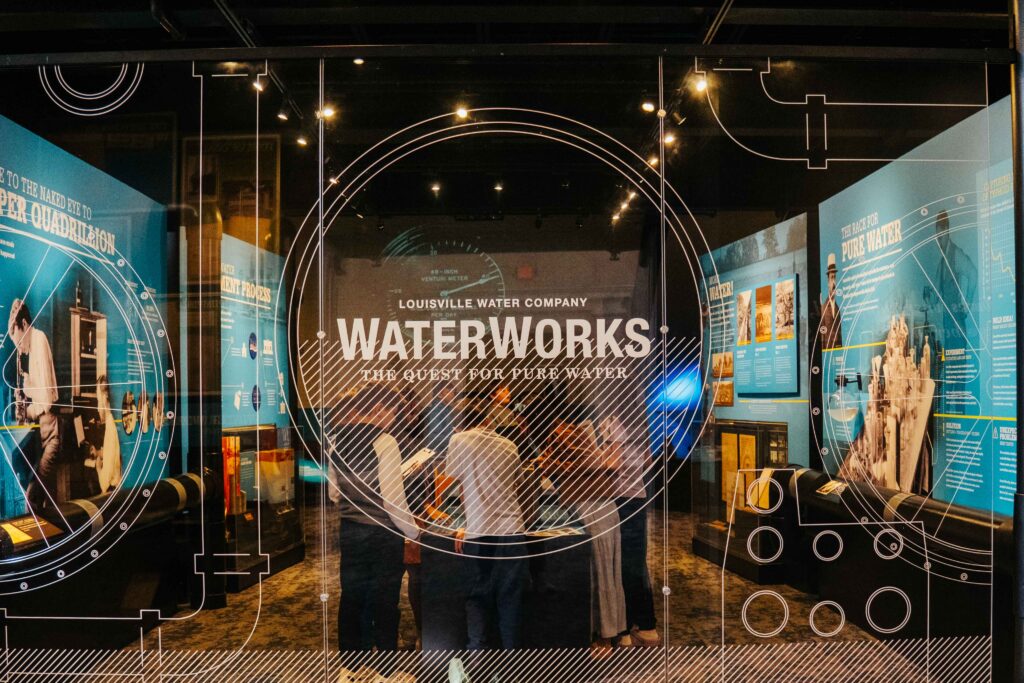
Today, visitors can experience that history up close at the interactive WaterWorks Museum, located inside the original Pumping Station and open to the public on the second Sunday of the month from noon to 5 p.m. The tour gives visitors a better understanding of the story of their drinking water and the ingenuity required to keep Louisville supplied through engineering advancements, tornadoes, devastating floods, and more than 165 years of growth.
Louisville Water Tower may be one of Louisville’s most photographed landmarks, but its greatest significance lies in the stories behind it. From steam-powered pumps and gravity-fed reservoirs to a steamboat pressed into service during the 1937 flood and the modern filtration systems of today, the site connects Louisville’s past with an essential service nearly 1 million customers continue to depend on every day.
For more information about Louisville Water Tower, tours, and more, visit LouisvilleWaterTower.com or LouisvilleWater.com.