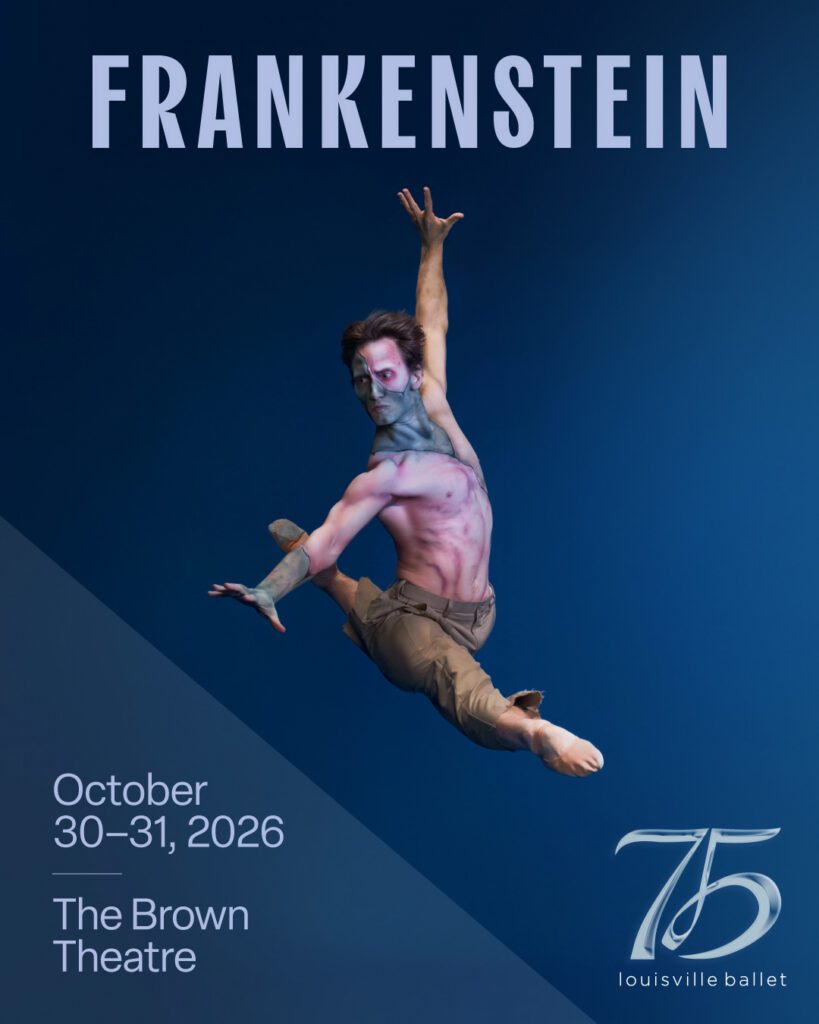
Louisville Ballet’s upcoming season is designed to showcase just how broad and varied the world of ballet can be. Under Artistic Director Anthony Krutzkamp, the company will move from the dark theatrical storytelling of Frankenstein (Oct. 30-31, The Brown Theatre) to the familiar holiday magic of The Brown-Forman Nutcracker (Dec. 11-21, The Kentucky Center, Whitney Hall), followed by a reimagined Carmen (Feb. 12-13, The Brown Theatre), the dancer-driven creativity of Bourbon & Ballet (March 19-21, Actors Theatre of Louisville), and contemporary works featured in Momentum (May 21-23, Actors Theatre).
Listen to the Audience Interview with Anthony Krutzkamp brought to you by Stock Yards Bank & Trust
While the season coincides with Louisville Ballet’s 75th anniversary, Krutzkamp is focused largely on what audiences will experience onstage now and how the company can continue evolving in the years ahead.
For Krutzkamp, putting together a season requires balancing several priorities. The repertoire needs to challenge and develop the dancers, provide audiences with compelling experiences, and ultimately give people a reason to come to the theater. After looking at Louisville Ballet’s recent repertoire, he saw an opportunity to expand the types of dance and storytelling presented throughout a single season while giving audiences something noticeably different each time they return.
“There’s a show for everyone,” Krutzkamp said. “They’re all extremely different.”
A Season Built Around Variety
That variety begins with Frankenstein, a production Krutzkamp is personally choreographing. The work uses movement, music, and theatrical elements to tell the familiar story in a way that demonstrates ballet’s ability to create drama and develop characters without relying on traditional dialogue. From there, the company transitions into The Brown-Forman Nutcracker, one of Louisville Ballet’s most recognizable productions and a holiday tradition for generations of local families.
Following the holidays, the season changes direction again with Carmen. Rather than presenting the familiar story in its traditional setting, this interpretation moves the action to 1970s Las Vegas, where Carmen becomes a showgirl caught in a love triangle.
Scheduled for Valentine’s Day weekend, the production represents the type of contemporary interpretation Krutzkamp believes can help introduce Louisville audiences to the changing world of ballet while also challenging the company’s dancers in new ways.
“If we don’t push the envelope, we’ll be left behind,” he said. “And that’s not a place I want to be.”
The variety continues with Bourbon & Ballet, which gives Louisville Ballet’s dancers opportunities to choreograph each other and present their own work. The production will also move to Actors Theatre, providing a different environment and allowing the company to experiment with the relationship between performers and audiences.
Later, Momentum, which will feature three world premieres, turns the focus toward contemporary dance and choreography that Krutzkamp describes as representative of what is happening in the art form around the world today. Moving between those styles is important not only for audiences but also for the dancers, who become more versatile artists by being asked to perform such different types of work.
Getting to Know the Dancers
Krutzkamp also wants this season to create a stronger connection between Louisville Ballet’s dancers and the people watching them. Audience members may recognize performers they have seen in multiple productions, but they often know relatively little about the individuals behind those performances. Krutzkamp believes that changing that relationship can give patrons another reason to follow the company throughout the season and develop a greater appreciation for the work required to become a professional dancer.
During Bourbon & Ballet, dancers will take the microphone to introduce themselves and the works they have helped create. Krutzkamp also wants dancers interacting with patrons following performances and participating more visibly in community events.
Louisville Ballet’s social media and playbills will contribute to that effort by highlighting individual dancers and sharing more about their backgrounds, hometowns, and interests away from the stage. Ideally, audience members will begin identifying favorite dancers and following their development from one production to the next.
“We’re doing great ballet here,” Krutzkamp said. “We’ve got to sing that from a mountaintop because we should be proud of what we’re doing here.”
Keeping The Nutcracker Fresh
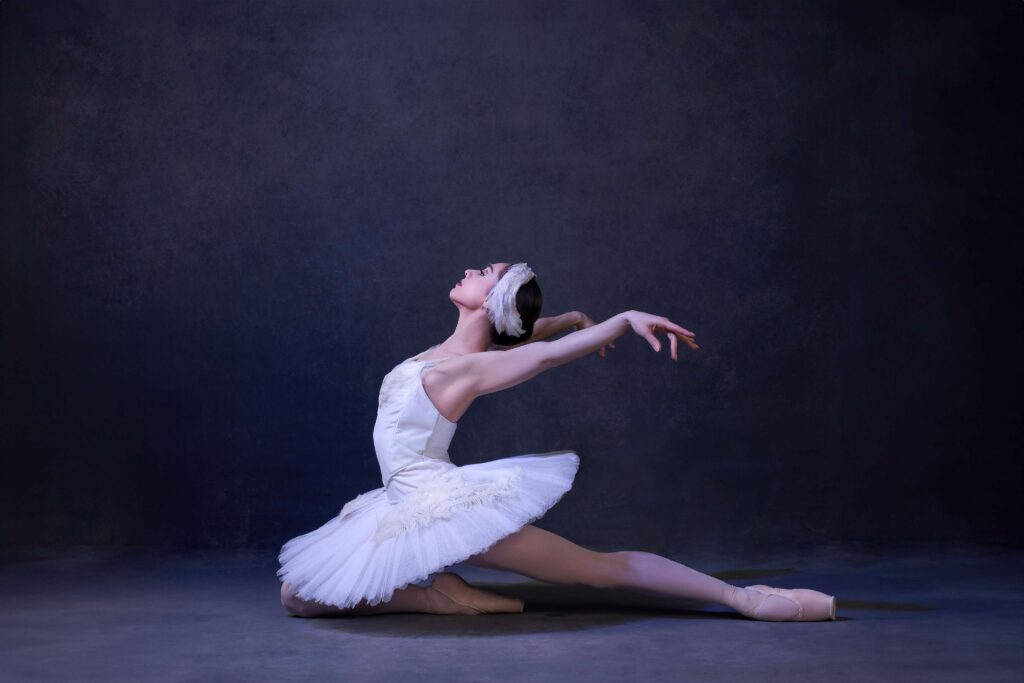
The Brown-Forman Nutcracker occupies a unique place within the season because so many audience members already know the story and have experienced Louisville Ballet’s production numerous times. For some families, attending the ballet each December has become part of their holiday traditions. Krutzkamp believes that familiarity is part of its appeal, but he also points out that audiences are not necessarily seeing exactly the same performance year after year.
Dance technique and athleticism continue to evolve, and each generation of dancers brings different physical abilities and personalities to familiar roles. Movements that might once have been expected only from experienced professional dancers are increasingly attainable by younger performers, allowing the production to continue developing even when the story and music remain familiar.
“Every year you come, the dancers are getting stronger — higher jumps, higher legs, more pirouettes,” Krutzkamp said. “It becomes more fun and more exciting simply because of the way dance continues to evolve.”
Louisville’s production also incorporates elaborate theatrical illusions surrounding Herr Drosselmeyer and the magical transformation at the heart of the story, adding another layer of spectacle.
Yet Krutzkamp sees The Brown-Forman Nutcracker as more than an annual tradition. Because the production attracts families and patrons who may not regularly attend ballet, it provides one of Louisville Ballet’s best opportunities to introduce new audiences to the company.
If someone attends The Brown-Forman Nutcracker because it is part of their family’s holiday tradition and later returns for Carmen, Momentum, or another production, that initial experience has opened the door to a much broader appreciation of dance.
When the Ballet and Orchestra Come Together
Another important part of The Nutcracker experience is hearing Tchaikovsky’s score performed live by the Louisville Orchestra. From the audience, the dancers and musicians can appear almost effortlessly synchronized, but creating that connection requires detailed communication between Krutzkamp, the conductor, dancers, and orchestra. Tempo is particularly important because the physical characteristics and individual styles of the dancers can affect how choreography is performed.
A taller dancer, for example, may jump, turn, or partner differently from a shorter dancer, requiring subtle changes in musical timing. The conductor has to remain aware of what is happening onstage while simultaneously leading the musicians, allowing the music to respond to the dancers rather than simply accompanying them.
Because those variables change from performance to performance, each show becomes its own experience. “It’s a fleeting moment in time that’s never going to be exactly the same again,” Krutzkamp said.
Giving Audiences a Reason to Return
With productions that range from theatrical storytelling and holiday tradition to contemporary choreography, Krutzkamp does not expect every audience member to respond to every show in exactly the same way. Instead, he hopes the variety gives people multiple opportunities to discover what interests them.
Someone who enjoys theater may find an entry point through Frankenstein, while another patron may first come through the doors for The Brown-Forman Nutcracker. Others may be intrigued by the Las Vegas setting of Carmen or the contemporary approach of Momentum.
Ultimately, Krutzkamp wants audiences to see the development of Louisville Ballet’s dancers as they move between those different styles and to feel a greater connection with the artists themselves.
“I’m hoping they feel that spark, that electricity, that makes them want to come back for more,” he said.
If audiences leave one performance already wondering what they might see at the next, the season will have accomplished much of what Krutzkamp set out to do.
His description of what lies ahead may also be the simplest invitation to experience it: “You’re in for a wild ride, and it’s going to be a great time.”
For tickets and more information, visit LouisvilleBallet.org